Living in China: What Western Expats Won't Tell You
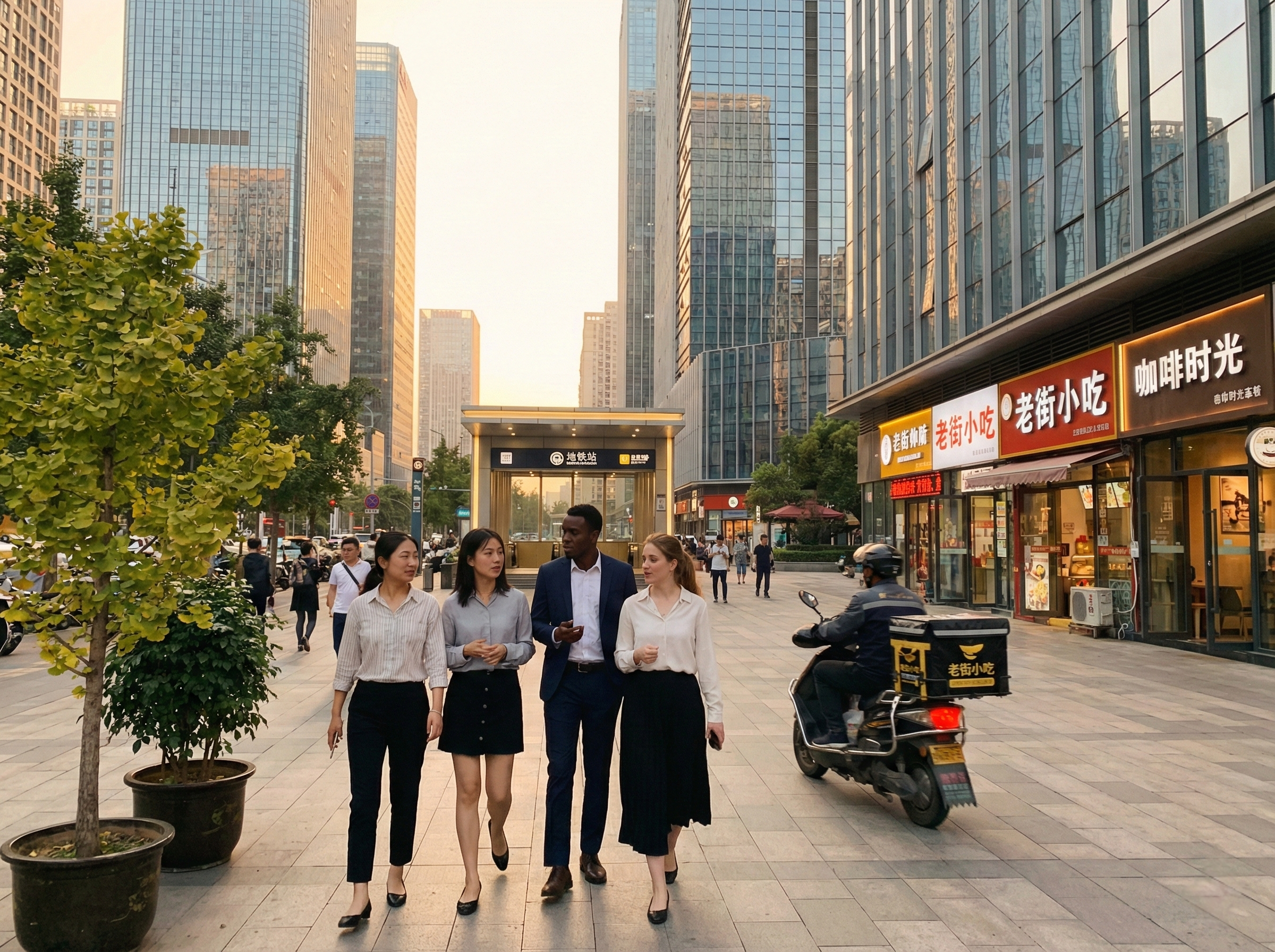
Why China? 3 Lifestyle Benefits That Surprise Every New Expat
If you’re considering a move to China, forget what you think you know. The reality of daily life here challenges almost every assumption Western media has fed you.
When people ask me what it’s actually like living in China, I don’t start with the Great Wall or the food. I start with three things that genuinely changed my daily life: safety, convenience, and affordability. These aren’t tourist attractions—they’re the fabric of everyday existence here, and they’re what keep expats staying far longer than they originally planned.
Walking Alone at 3 AM: Safety That Feels Almost Surreal
Here’s something that still catches me off guard after years of living here: I can walk alone at 3 AM in virtually any Chinese city and feel completely safe.
Coming from New York, this was genuinely hard to believe at first. In Manhattan, you develop a sixth sense—checking over your shoulder, avoiding certain streets after dark, keeping your phone hidden. That mental load? It doesn’t exist here.
The Numbers Back It Up
China consistently ranks among the safest countries in the world for violent crime. But statistics don’t capture what it feels like to simply… not worry. To take a late-night stroll because you can’t sleep. To let your phone charge on a café table while you use the restroom. To see elderly people doing tai chi in parks at dawn, alone, without a second thought.
This isn’t limited to Shanghai or Beijing either. Whether you’re in a tier-1 megacity or a smaller city you’ve never heard of, the baseline level of public safety is remarkably consistent. Security cameras are everywhere, yes—but so is a cultural emphasis on social harmony and community vigilance that makes crime genuinely rare.
What This Means for Your Daily Life
- Night owls welcome: Late-night walks, runs, or bike rides are normal, not risky
- Solo female travelers: Women regularly report feeling safer here than anywhere else they’ve lived
- Your stuff is actually safe: Left your bag somewhere? It’s probably still there when you go back
- Kids have independence: Children walk to school alone, play outside unsupervised—something increasingly rare in the West
2 AM and Hungry? No Problem: Convenience on Another Level
It’s 2 AM. You’re hungry. In most American cities, your options are a questionable gas station hot dog or waiting until morning. In China? Open your phone, order from dozens of restaurants still operating, and have hot food at your door in 20 minutes.
This isn’t a big-city luxury. This is Tuesday night in a third-tier city.
The Delivery Economy
China’s food delivery infrastructure is genuinely world-class. Apps like Meituan and Ele.me connect you to an enormous ecosystem of restaurants, convenience stores, and grocery options—most of which deliver until midnight or later, with many operating 24/7.
The speed is what shocks newcomers most. A 20-minute delivery window isn’t a premium service; it’s the baseline expectation. Drivers on electric scooters zip through dedicated lanes, and the logistics are so optimized that late delivery is the exception, not the norm.
Unmanned Convenience Stores: The Future Is Already Here
But delivery is just the beginning. Walk around any Chinese city late at night and you’ll encounter something that feels straight out of science fiction: unmanned convenience stores.
No staff. No registers. You scan an app to unlock the door, walk in, grab what you need, scan the items, and walk out. At 3 in the morning. In your pajamas if you want.
These aren’t pilot programs in select neighborhoods—they’re widespread and growing. The technology infrastructure that makes them possible (ubiquitous mobile payments, sophisticated inventory systems, robust security) is simply more advanced here than in most Western countries.
Beyond Food: Everything Delivers
The convenience culture extends far beyond meals:
- Groceries: Order fresh produce and have it delivered within an hour
- Pharmacy items: Medications (including some that require prescriptions in the West) delivered to your door
- Laundry services: Pick-up and delivery dry cleaning via app
- Package delivery: The logistics network is so efficient that next-day delivery is standard, same-day is common
- Services: Need a plumber, electrician, or massage therapist? Apps connect you instantly
Living here recalibrates your expectations. What feels like luxury convenience elsewhere is just… how things work.
The Math Is Just Different: Affordability That Changes Everything
Let me give you a number that still makes me shake my head:
A 15-minute Uber in New York: $50. The same distance in a Didi in Shenzhen: $5.
Ten times cheaper. And the car is probably cleaner.
When I worked in New York, my company paid for car service across the river because the cost was genuinely prohibitive for employees. In China, taking a Didi across town is a casual decision, not a budget consideration.
Transportation Costs
- Didi rides: A typical cross-city trip runs 30–50 RMB ($4–7 USD)
- Metro systems: Modern, clean, air-conditioned, and usually under $1 per trip
- High-speed rail: Travel between cities at 300+ km/h for a fraction of flight costs
- Electric scooters: Many expats buy one for $300–500 and spend almost nothing on transportation
The Bigger Picture
But transportation is just one piece. The affordability advantage extends across almost every category:
Food:
- A filling local lunch: 15–30 RMB ($2–4)
- Dinner at a nice restaurant: 80–150 RMB ($11–21) per person
- Grocery prices roughly 30–50% lower than US equivalents
Housing:
- A modern 2-bedroom apartment in a tier-1 city center: $800–1,500/month
- The same quality in a tier-2 city: $400–800/month
- Utilities, including high-speed internet: often under $100/month total
Healthcare:
- A comprehensive annual health screening: $150–300
- Doctor visit at a top hospital: $10–30
- Medications: Often 70–90% cheaper than US prices
What This Means Financially
The combination of lower costs and competitive salaries (especially for skilled expats) creates a financial equation that’s hard to match anywhere else. Many expats find they can:
- Save significantly more than they could back home
- Afford a lifestyle that would be upper-middle-class in Western terms
- Travel extensively throughout Asia on weekends and holidays
- Actually enjoy their income rather than watching it disappear into rent and basics
The Compound Effect
Here’s what the 30-second TikTok version of these stories can’t capture: these three factors—safety, convenience, and affordability—compound on each other.
Because you feel safe, you’re more likely to explore at night, which means you discover more of the convenience infrastructure, which costs so little that you actually use it freely, which gives you more time and energy, which makes you feel more at home, which makes the safety feel even more natural.
It becomes a positive spiral. Within months, the way you live fundamentally shifts.
Is China Right for You?
None of this means China is perfect or that the transition is effortless. Language barriers exist. Cultural adjustment is real. Certain Western conveniences (Google, Facebook, some news sites) require VPN workarounds. The bureaucracy can be frustrating.
But if you’re curious about what life could look like when safety, convenience, and affordability are the default rather than the exception—China deserves serious consideration.
The gap between perception and reality is wider here than almost anywhere else on Earth. The only way to really understand it is to experience it.
Considering a move to China? Seres Immigration specializes in helping professionals navigate work permits, visas, and the transition to life in China. Contact us to start the conversation.
Related Articles:
- Coming soon: China’s Bullet Trains: Why Flying Feels Pointless
- Coming soon: Healthcare in China: What $200 Gets You
- Coming soon: 5 Things Americans Get Wrong About China
Have questions about living in China? Drop them in the comments below or reach out directly—we love helping people discover what life here is really like.